
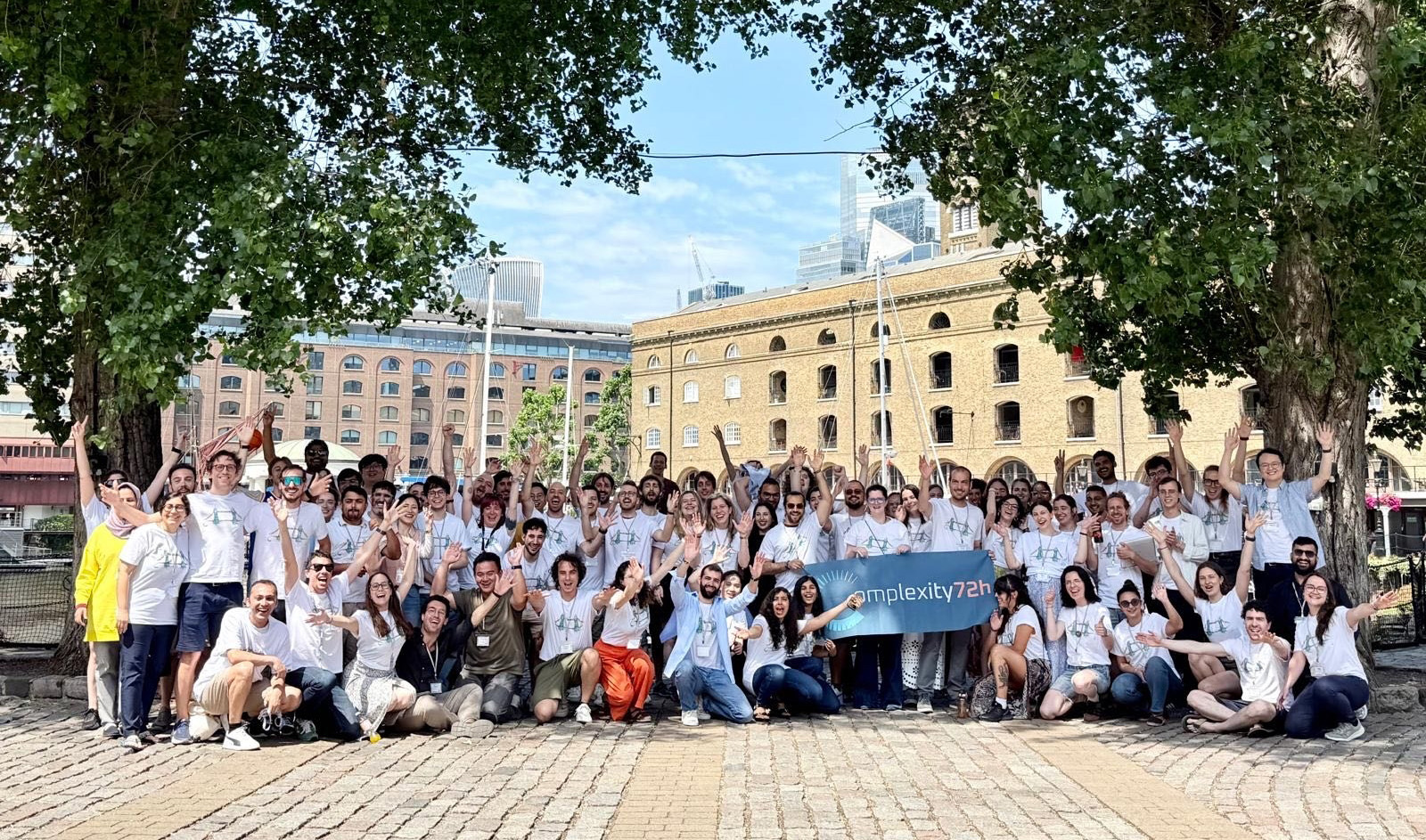
The 2026 edition of the Complexity 72h Workshop has wrapped up in London, bringing together roughly 60 participants and 14 tutor teams for five days of intensive, collaborative science. Hosted by Northeastern University London and the Network Science Institute (NetSI) at their Devon House campus—a striking location overlooking London’s historic St Katharine Docks, the event carried on a tradition launched in 2018 where researchers form small teams around a specific project and work flat-out for 72 hours, with the goal of having a paper ready for an online repository by the time the clock runs out. The track record so far is perfect — all 33 projects from past editions have resulted in preprints, and 9 have gone on to become peer-reviewed publications, leading to long-term collaborations.
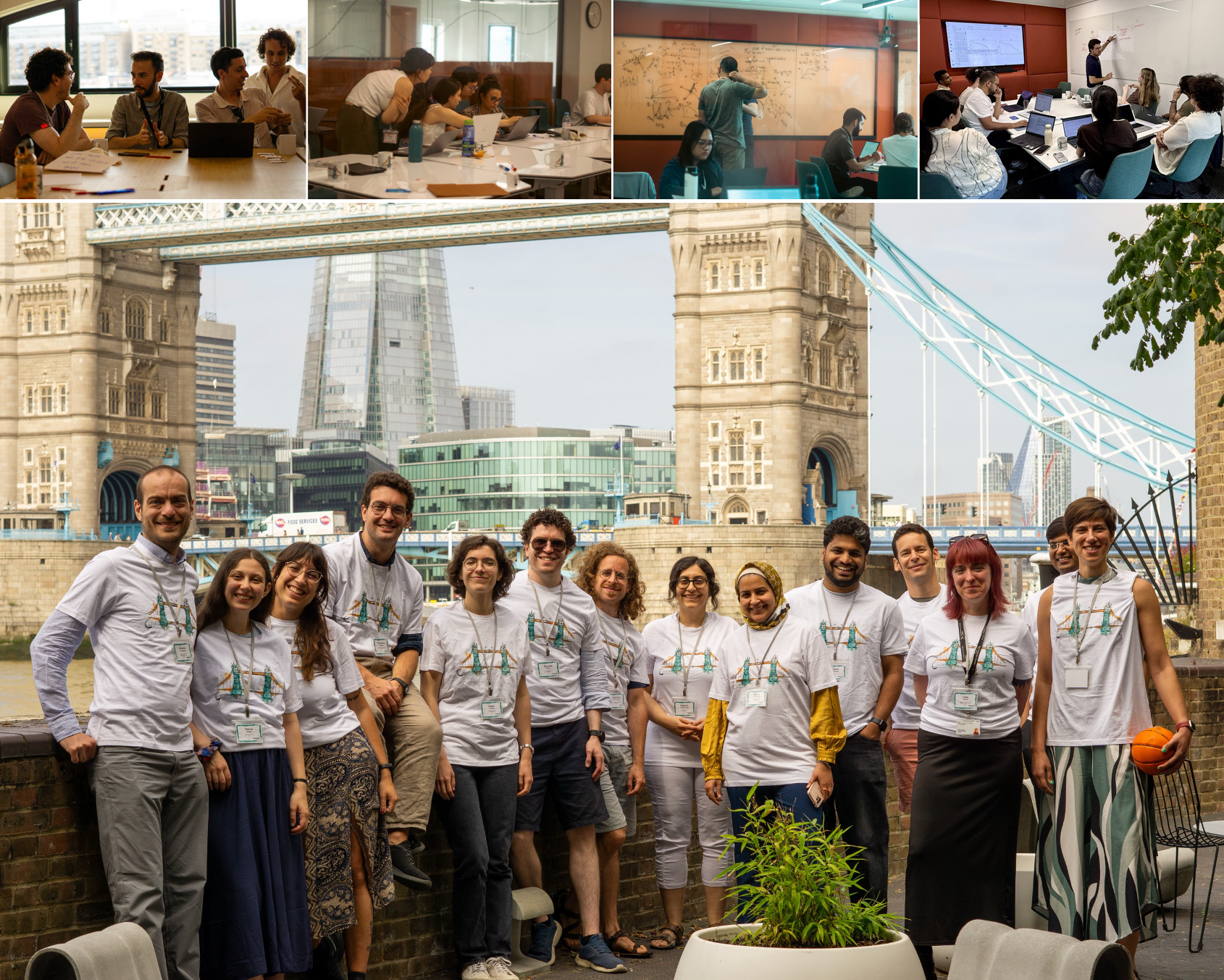
Projects
This year's cohort tackled a notably wide range of questions. Projects spanned political polarization and belief networks, brain connectivity and the social self, regional greenhouse-gas trends, emergent deception in LLM-based agent models, statistical signatures of success in NBA basketball, patterns in egocentric communication networks, and the long-term impact of AI on education. The diversity of topics is part of what makes the format so productive: participants arrive from different disciplines and leave having genuinely done science together.
True to the workshop’s mission of producing a research preprint within 72 hours, the results of the seven projects can already be viewed on arXiv:
- Linking the "inner" and "outer" self to mental health and brain networks
- Preferentiality and bandwidth drive tie activity in online and offline ego networks
- From streaks to synergies: A multi-scale analysis of performance and scoring in the NBA
- Students using GenAI lag behind in problem-solving competence: an agent-based study of classroom networks
- SimPol: Simulating polarisation in political belief networks in European countries
- Is Lying an Emergent Behaviour in LLMs? Evidence from Gaslighting AI agents in a Sustainability Game
- Investigation of regional variations in CO2 growth rates : Integrating Emission Inventories and Atmospheric Observations
Speakers & Complexity Next Gen
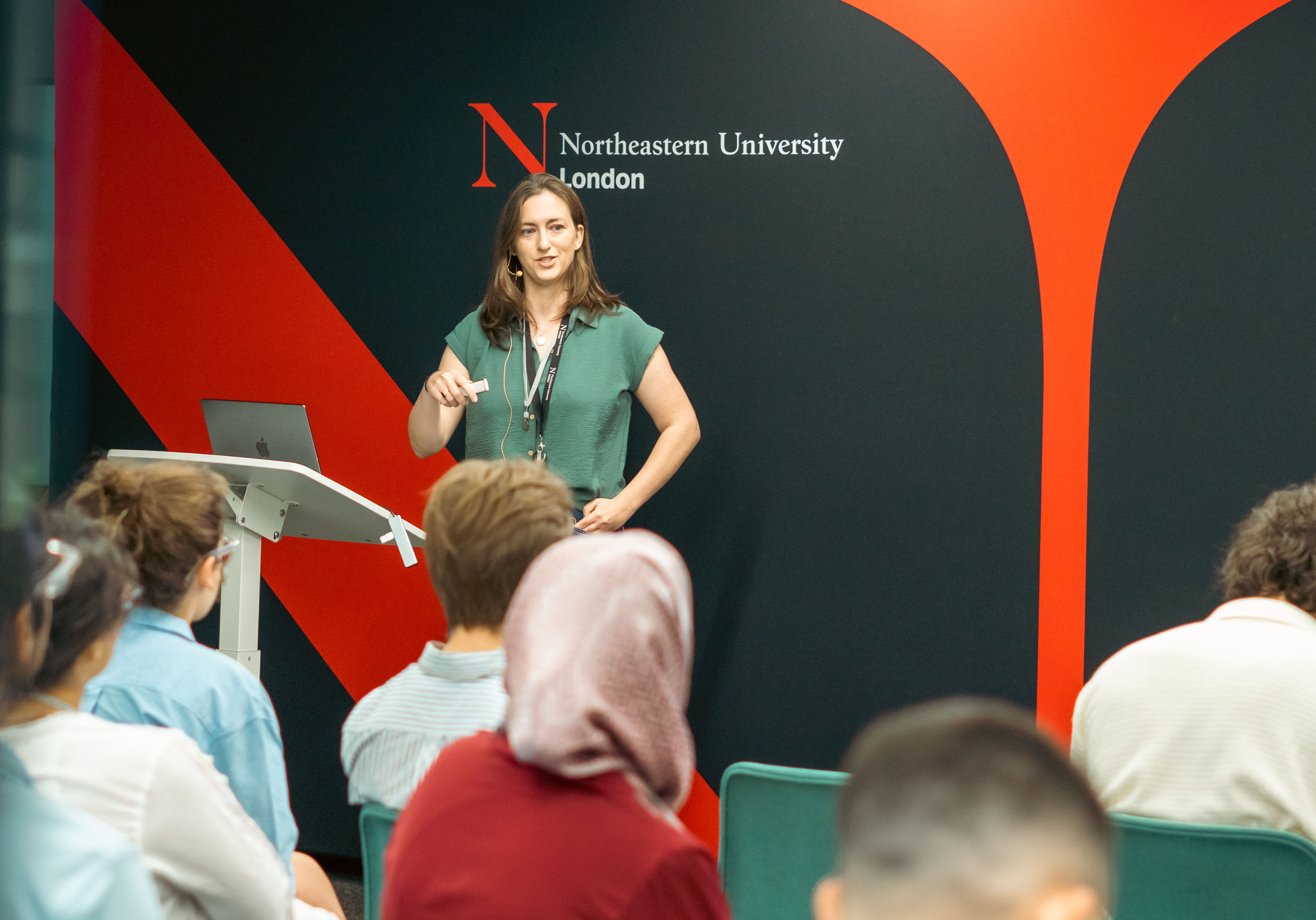
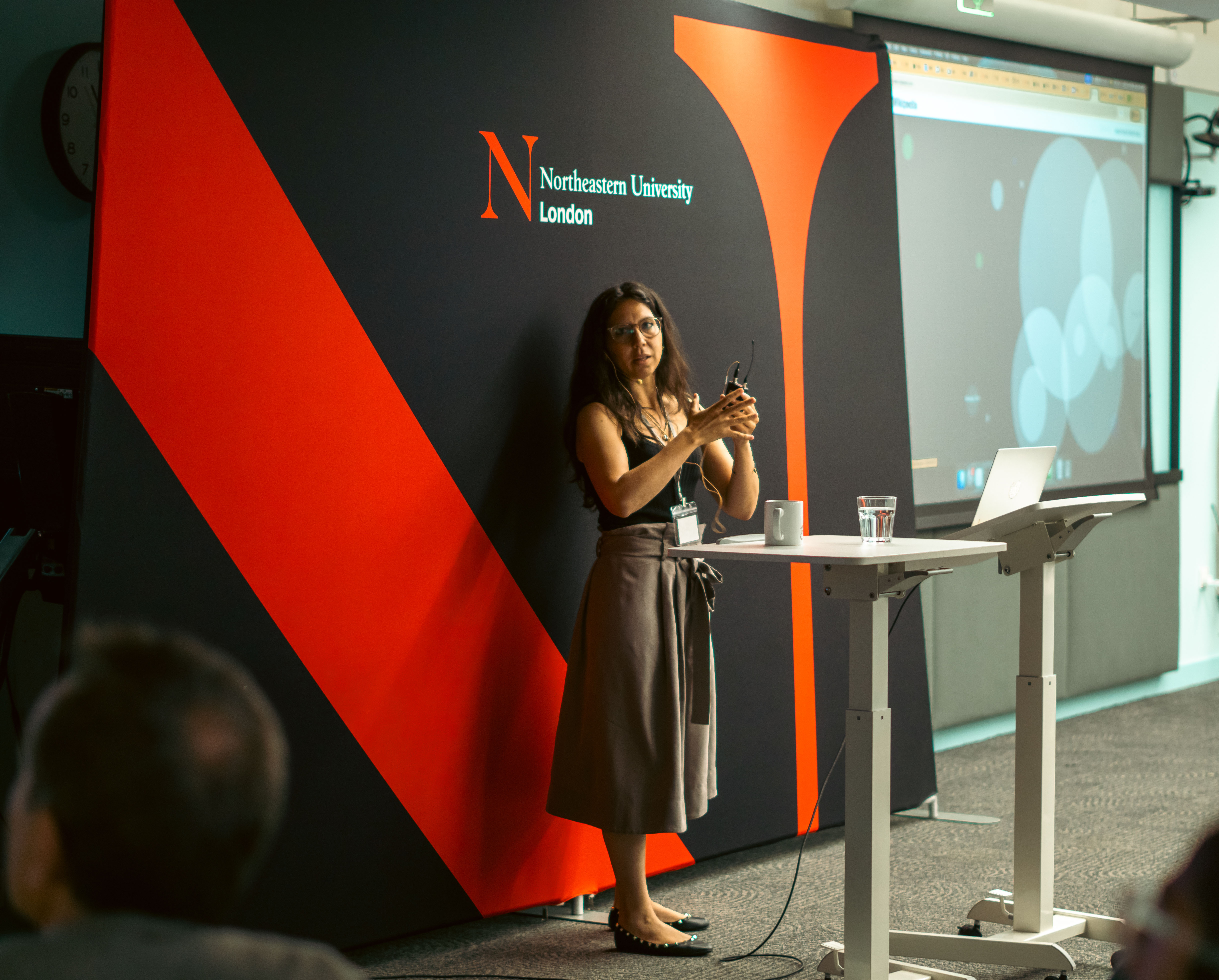
The speaker lineup was equally broad. Guido Caldarelli, Director of the Institute of Complex Systems in Rome, lectured on financial networks; Jessica Davis of Northeastern's MOBS Lab brought expertise in epidemic modeling and network science; Federico Levi, Deputy Editor for Physics and Computing at Nature, led a session on writing and publishing influential research; and Miriam Redi, Research Manager at the Wikimedia Foundation, spoke on research science for free knowledge.
The London edition also marked a milestone beyond the workshop itself: the formal launch of Complexity Next Gen, a new non-profit organization founded in Torino (Italy) in 2026. Dedicated to training the next generation of researchers in complex systems, the association focuses on early-career scientists and promotes innovative, hands-on, and interdisciplinary forms of scientific training — exposing participants to the full scientific process, from collaboration and problem framing through to publication. Complexity72h is its flagship event, and with participation numbers growing edition by edition, the appetite for this kind of immersive research sprint is clearly expanding.
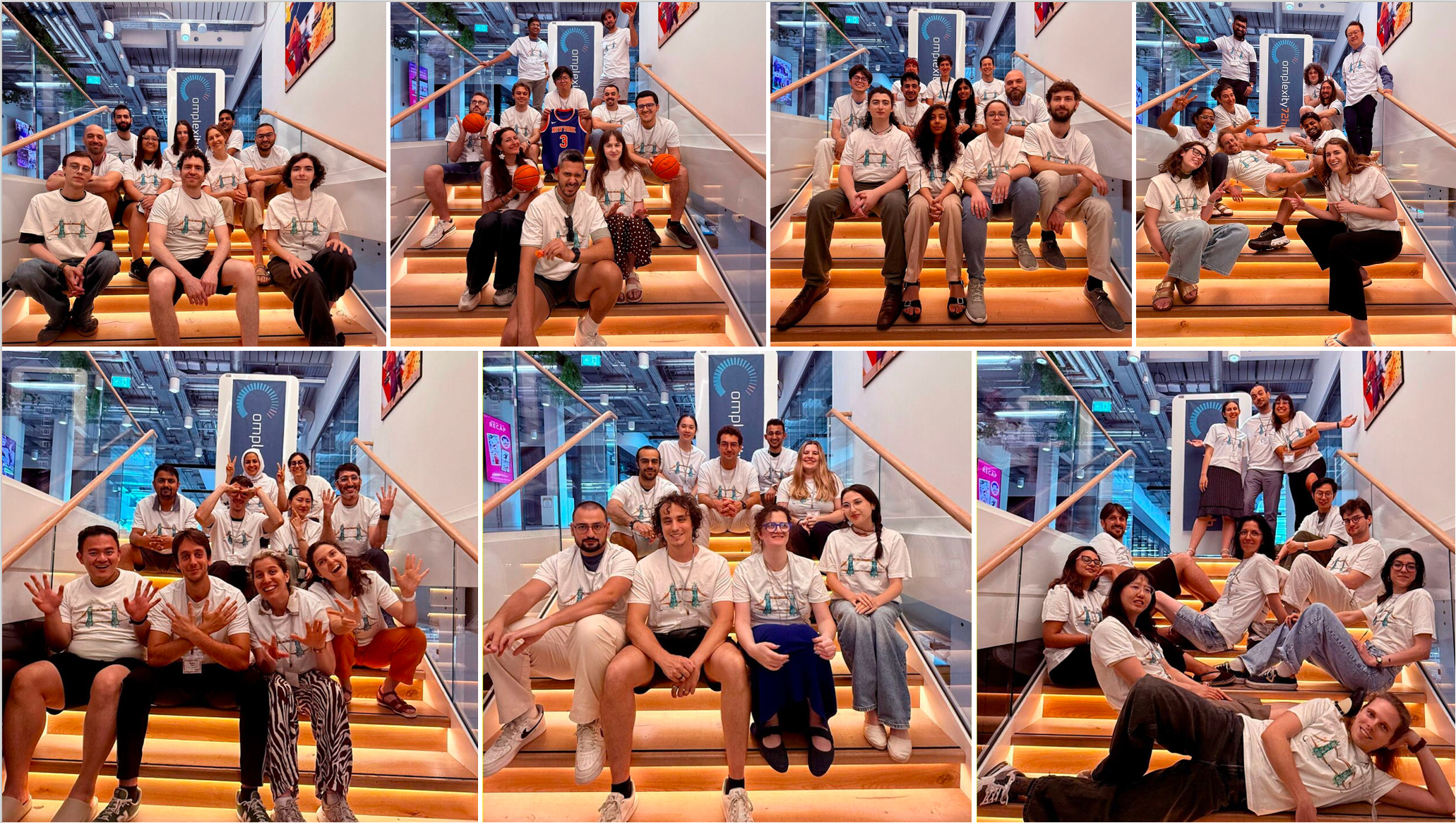
Team NetSI
None of this would have been possible without the people behind the scenes. The NetSI team played a central role across every dimension of the workshop: Iacopo Iacopini, Leonardo Federici, and Maddalena Torricelli as part of the organizing team; Andreia Sofia Teixeira and Haily Merritt among the tutors guiding participants through their projects; and Chethan Kavaraganahalli Prasanna, Lochan Chaudari, and Xuan-Chen Liu joining as participants themselves — a reflection of the institute's belief in this kind of scientific community-building. Thanks to the support of Northeastern University London, NetSI, and the Complex Systems Society, the organizers were also able to offer 16 partial and full scholarships, ensuring that financial constraints were not a barrier to participation.
What the format proves, year after year, is that ambitious scientific questions don't always need years of isolated effort to move forward. Sometimes 72 hours, the right room of people, and a hard deadline are enough.
Photos courtesy of Iacopo Iacopini and Maddalena Torricelli


